 English
 Français
 Español
 Deutsch
 Italiano
 العربية



Tel :+86-755-86961139
Email :sales@vivo-light.com
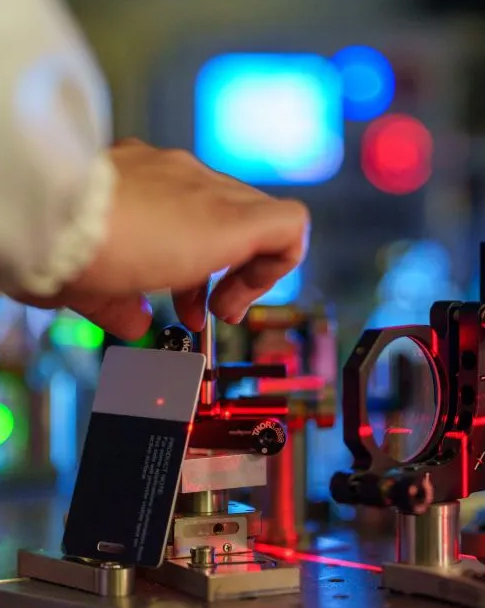

Near-infrared (NIR) vein visualization technology is widely utilized to assist healthcare professionals in identifying superficial vascular structures during peripheral intravenous access. When evaluating clinical vein finders, devices generally fall into two primary display categories: Projection vein finders and Screen-based vein finders.
Understanding how these visualization methods differ in display format, ergonomics, hands-free integration, and workflow adaptability helps clinical departments select the equipment that best aligns with their operational needs.
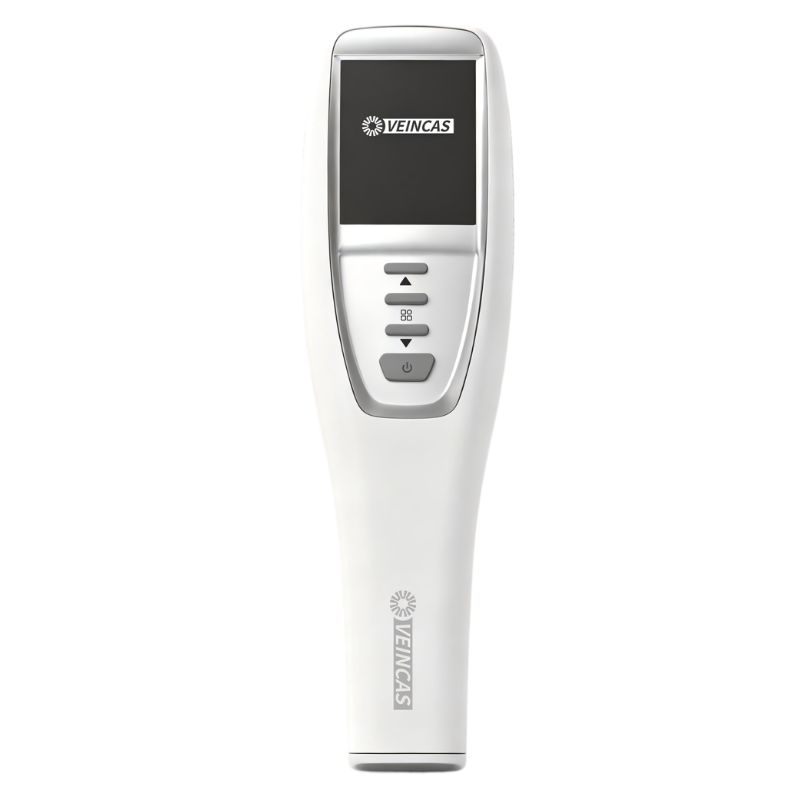
Display Modality: Projection units project NIR vascular maps directly onto the patient's skin surface, whereas screen-based devices render the vascular image on an integrated or external display monitor.
Line of Sight: Direct projection maintains visual alignment with the puncture site, while screen-based systems require alternating visual attention between the monitor and the insertion area.
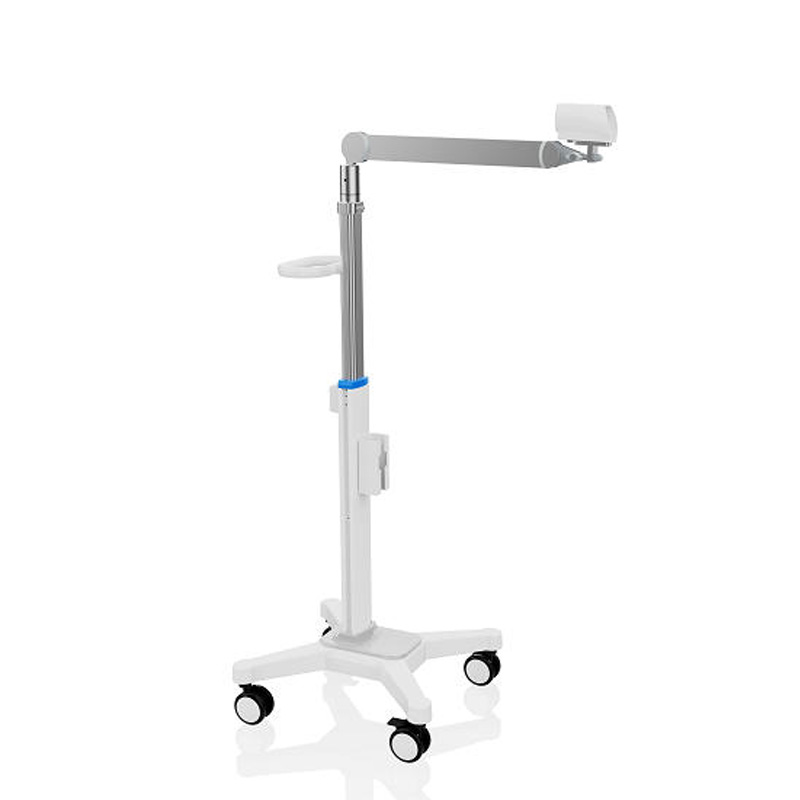
Operation & Mounting: Both formats offer handheld and mounted configurations, though projection models frequently integrate with mobile stands to support hands-free procedures.
Cleaning & Surface Maintenance: Non-contact optical projection minimizes direct skin contact near the target site, and seamless housings simplify surface wipe-downs between patients.
| Comparison Dimension | Projection-Based Vein Finders | Screen-Based Vein Finders |
| Image Presentation | Casts NIR vascular map directly onto anatomical skin surfaces in real time. | Displays 2D vascular images on an attached LCD/OLED screen or external monitor. |
| Line-of-Sight Alignment | In-situ projection allows clinicians to observe both the vessel map and needle entry simultaneously. | Requires shifting gaze between the patient’s limb and the display screen during access. |
| Hands-Free Integration | Frequently paired with articulating arms or wheeled floor stands for contact-free positioning above the limb. | Handheld units require one hand to hold or specific bracket mounts to position the screen within eye level. |
| Cleaning & Disinfection | Operates at a working distance (approx. 15–25 cm), reducing contact with the active venipuncture site. | Handheld screens or touch interfaces require regular surface disinfection between uses. |
A primary distinction between projection and screen-based devices is how visual information is delivered to the operator.
Projection-based systems display the vascular network directly over the target anatomy. Because the image overlay is aligned with the underlying veins, clinicians can maintain continuous visual focus on the needle entry point and surrounding tissue. This direct alignment supports standard hand-eye coordination techniques during site selection and needle advancement.
Screen-based devices present vascular images on a detached screen. While these displays can provide high-resolution imaging and contrast adjustments, the physical separation between the screen and the patient's arm requires the practitioner to switch focus between the monitor and the puncture site. Clinicians accustomed to ultrasound guidance often adapt quickly to this indirect visual approach.
Near-infrared illumination detects deoxygenated hemoglobin beneath the epidermis, helping clinicians assess superficial vascular networks.
Vessel Pathway and Bifurcations: NIR mapping highlights vessel continuity, branching, and curvature prior to skin penetration, aiding in the selection of straight venous segments.
Venous Valves and Rolling Veins: Real-time feedback can assist in identifying venous valves and lateral vessel movement under needle pressure, allowing clinicians to adjust insertion angles accordingly.
Challenging Populations: Clear subcutaneous visualization aids in assessing patients with difficult venous access (DVA), such as pediatric, geriatric, or bariatric individuals where visual inspection and palpation alone may be inconclusive.
Bedside flexibility is critical across outpatient clinics, emergency departments, and general wards.
Hands-Free Support: Mobile floor stands and tabletop articulating arms hold infrared projection vein finder devices above the target site, freeing both hands for vein stabilization and cannula control.
Mobility and Battery Power: Portable units equipped with rechargeable lithium-ion batteries allow staff to move between rooms without constant reliance on fixed power outlets.
Optical Adjustments: Multiple brightness settings, color modes, and size adjustments help clinicians optimize visual clarity under varying ambient light conditions and across diverse skin tones.
Infection control standards require clear cleaning protocols for all bedside medical devices:
Non-Contact Assessment: Projection devices typically operate at a focal distance of 15–25 cm (6–10 inches) above the skin, minimizing physical contact with the venipuncture area.
Surface Disinfection: Sealed, fanless external enclosures without open vents reduce liquid ingress risks, allowing routine surface decontamination with standard hospital-grade disinfectant wipes or isopropyl alcohol solutions.
Different clinical settings present distinct workflow requirements. When choosing between projection and screen-based configurations, departments may consider the following factors:
Emergency and Pediatric Units: Often prioritize hands-free projection setups that allow rapid, unencumbered access while maintaining focus on uncooperative or high-acuity patients.
Infusion Centers and General Wards: Mobile, battery-powered portable units support flexible transport across multiple bedsides during routine blood draws and catheter placements.
Vascular Access Specialist Teams: May utilize a combination of projection units for routine peripheral access alongside advanced ultrasound equipment for deep-line placements.
Vivolight projection vein finder uses near-infrared light absorbed by deoxygenated hemoglobin in the blood. The reflected optical data is processed and projected as a real-time, high-contrast visual map directly onto the patient's skin surface.
The core difference lies in the display interface. Projection models cast the vascular map straight onto the patient's skin to maintain direct visual alignment. Screen-based models display the vascular imagery on an external or integrated monitor, requiring the operator to view a separate screen.
Yes. Many projection devices can be mounted on mobile roll stands, fixed poles, or flexible articulating arms, allowing clinicians to position the light field over the target limb and operate with both hands free.
Devices with sealed, smooth enclosures can be cleaned using standard hospital-grade disinfectant wipes or alcohol solutions in accordance with institutional infection control protocols and manufacturer instructions.
Leave A Message
Scan to WhatsApp :


 IPv6 network supported